Introduction
Today, there are many different dating apps, and it has become an increasingly popular way to find partners, with 53 million users just in the United States. But, the dating apps are not perfect. There have been many underlying biases that many users do not know about as they are using them. This makes it unfair to many people who are not being boosted by the biases the dating apps have allowed. As an example, Riki Thompson (2022) points out in her video that, “Even though they may allow a user to put non-binary as a gender identity, they’re still forced to say they’re searching for a man or a woman” (8:31). Another source from NPR points out that dating apps like Tinder are for-profit businesses that need to make money off of their users (Rosalsky). These dating apps offer special provisions such as premium subscriptions to boost accounts, but only so many people can afford those, which is just another bias. In this paper, I plan to use textual analysis and observations to uncover the exact biases and learn what these dating apps can do to fix these issues.
Dating apps all over the world are becoming a common way to meet people and find romantic relationships in life. There are tons of different dating apps that are used today that cater to a variety of people. According to the Pew Research Center, “Three-in-ten U.S. adults say they have ever used a dating site or app” in 2022 (Vogels & McClain). If you take a look at Figure 1, the graph shows you that thirty percent of U.S. adults have used a dating app before.
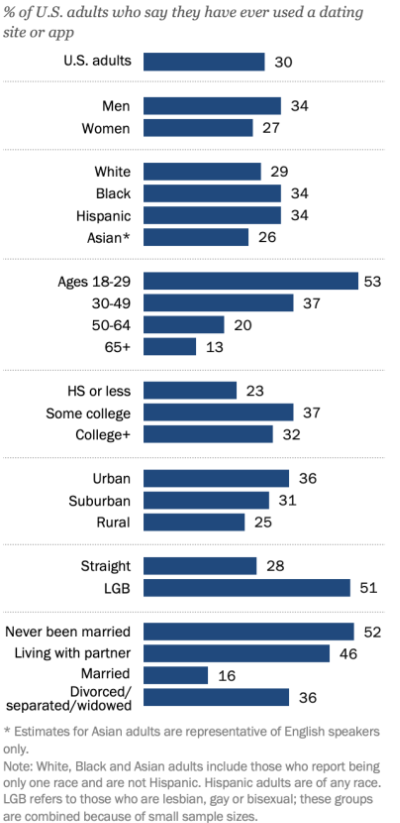
Figure 1 shows what percentage of Americans have ever used a dating platform
Having been a dating app user myself and even finding a long term relationship on Tinder as a straight, white, female, I was curious as to the experiences that other people who are different from me had and the possible biases that they came across on the dating apps that I did not encounter. As I did research, I realized that there are a variety of biases that many people will come across on these dating apps. In this research paper, I looked at many different sources including scholarly peer reviewed sources, secondary sources, and the dating apps themselves to help better understand and study the effects and biases that dating apps have.
LQBTQIA+
I will first start off by talking about the biases dating apps hold when it comes to the LGBTQIA+ community. A study done on Bumble by Arkenbout, et al. called Bumble Without Gender: A Speculative Approach to Dating Apps Without Data Bias, these researchers look at how this platform has continued to integrate exclusion and binary gender categories into dating. Bumble starts the creation of an account by asking users to identify as man or woman. See Figure 2.
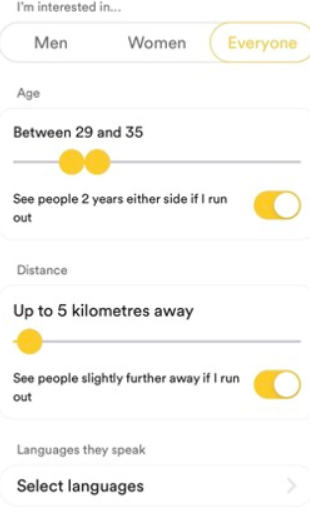
Figure 2: Bumble’s filter options for new users when they are first making their account.
This immediately excludes people who identify as non-binary or gender fluid and could possibly block them from using the app altogether. This gender bias is also affected outside just the user’s experience and collected data. The data is categorized based on gender and assigns traits and behaviors to adhere to heteronormative relationships. Bumble follows more of a gender normative design where women match with men and have to message first in order to start a conversation. In Riki Thompson’s video, she analyzes these dating apps and sites and points out that some of them are not fully inclusive to non heteronormative match making. They do not include people who are non-binary, transgender, or other gender or sexual identities. You can use non-binary as a gender identity on some platforms, but it does not let you seek out other non-binary people. She also looked at Bumble as an example. At one point, Thompson (2022) quotes Captain Amab saying, “any platform that has restrictive binary gender options automatically becomes a fraught space because of the way it’s organized. If it’s not sorting me into the right categories, it’s going to mess up the way that the thing is supposed to work” (9:20).
This YouTube video by Riki Thompson explores how dating apps treat members of the LGBTQIA+ differently than they do heteronormative users.
Subscriptions
There are other ways that these dating apps can hold biases. Many dating apps such as Tinder and Bumble (two of the most common dating apps) offer premium subscriptions that give subscribers much more than the free subscriptions do. Although it is nice that many of the apps are free in general, advanced subscription tiers offer people enhanced privileges. For example Tinder offers Tinder Gold, which includes unlimited likes, “rewinds,” five daily Super Likes, a monthly account Boost, no ads, and the users get to see who swipes on them (and that is not even the highest tier on Tinder). Although anyone can get Tinder for free, more privileged people who can pay for Tinder Gold and other tiers have more chances of getting likes and going on dates. Bumble as well has enhanced filtering and other privileges that the normal apps do not have on their own. These advantages increase matching potential for those that have the money to spend and are unfair to those that are not able to pay for such exclusivities.
Another bias that I have noticed while researching Tinder Gold and Platinum is that there is no exact amount that users will pay for these advanced tiers. According to an article by Verdict, the algorithms create a personalized price for every individual who uses the app. In fact, thirty one different prices have been offered within one country. “Also, research by consumer advocacy group Choice found that men over 50 were charged $34.37 per month, compared to between $6.99 and $16.71 for any users under 30” (Verdict). This discriminatory pricing has even led to a 2019 lawsuit against them, yet the company continues to use the same algorithm and get away with asking older users to pay more for the same privileges as younger people. A user’s financial access creates unequal opportunity and the biases that these apps hold is very prevalent when looking at the personalized pricing for the different age groups.
I should remind you that these dating apps need to have and continue to make money in order to keep themselves alive, which is why they offer these tiered subscriptions. But as the NPR article points out, dating apps are a paradox. Hinge has called themselves “the dating app designed to be deleted” (Rosalsky). They want their money, but must have success in helping users find love or else their reputation is hindered and people do not trust it as much. Although they have helped many people, including myself, find love, they are first a money making scheme and will do what they need to do to keep their business running, hence the subscription tiers and the prices.
The Algorithms
The algorithms that are used in the dating apps are another bias that has been studied quite a bit since they first came out. Like my example in the paragraph above, the algorithm is used for many things, such as subscription costs, who you see on your feed, and how often you are shown on others feeds. In the chapter Popularity Bias in Online Dating Platforms: Theory and Empirical Evidence in the book Manufacturing & Service Operations Management by Celdir, et al., the authors highlight popularity biases that the algorithm on dating apps have and how they have affected who users are seeing and not seeing on their account, based on “attractiveness” and willingness to message other users. Their study found that these platforms aim to maximize revenue and matches are not aligned, meaning the apps are looking more towards making money than creating matches. Therefore, the algorithms favor the users who get liked, like other accounts, message their matches, and spend a lot of time and/or money on the apps. These users are more likely to generate revenue and activity more than the less popular, “unattractive” users. The issue with these platforms being fully unbiased (in terms of subscription tiers and paying for extra boosts) is that they will lose more revenue and that could lead to less matches because people are not reaching each other as well. It truly is a paradox.
Another issue with the dating apps is that they use the same type of algorithms that platforms such as Netflix, Hulu, and Amazon Prime use, which is called collaborative filtering. Collaborative filtering is a mix of using your own preferences to create new recommendations and partly bases your new recommendations off of the more wide user database. “What this means is that when you first download Bumble, your feed and subsequently your recommendations will essentially be entirely dependent on majority opinion. Over time, those algorithms reduce human choice and marginalize certain types of profiles” (Arkenbout, et al.). Since these algorithms partly take into account the user’s taste along with other users’ tastes, it can create an echo chamber-like system. For example, if you have a similar type to someone else and you both have swiped on a few of the same people, you will start getting recommended their likes and the same goes for the other person. Your algorithms will start to look very similar and could filter out everyone who has different attributes such as hair color, skin color, personality traits, and interests, discriminating against marginalized people who are different from your “type.” There was even a fake dating app made called “Monster Match,” that was based off of Tinder’s algorithm (Figure 3). The creator Ben Berman showed exactly how the algorithms work with every swipe. If someone swiped right on a specific monster, it would show you more of the same after that, assuming you liked that certain kind of monster and got rid of every other kind of monster so you only saw ones that you were interested in. This gets rid of other options, even if over time you might become interested in other monsters or even like more than one from the start.
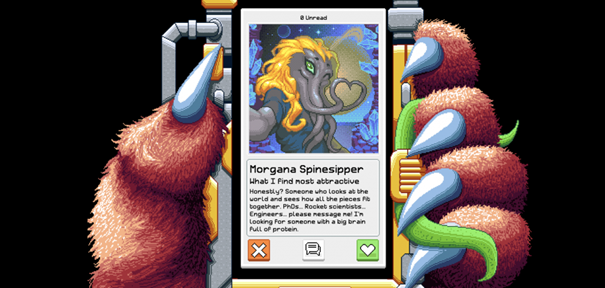 Figure 3 shows a picture of the game Monster Match
Conclusion
While digital dating have revolutionized the way that people meet and date, there are still a lot of biases and issues surrounding them every day, to many different people. I believe that these dating platforms need to look closer at what they can do to be unbiased and create a more inclusive algorithm that is not against age, attractiveness, wealth, or gender and sexual orientation and is welcoming to everyone, because everyone just wants to find love.
Arkenbout, C., O’Malley, J., Oyewo, A., & Parai, O. (2021, October 29). Bumble without gender: A speculative approach to dating apps without data bias. Masters of Media. https://mastersofmedia.hum.uva.nl/2021/10/bumble-without-gender-a-speculative-approach-to-dating-apps-without-data-bias/ Barbagallo, C., & Gonzalez Lantero, R. (n.d.). Dating apps’ darkest secret: Their algorithm. IE HST Rewire Magazine. https://rewire.ie.edu/dating-apps-darkest-secret-algorithm/ Celdir, M. E., Cho, S.-H., & Hwang, E. H. (2013). Popularity Bias in Online Dating Platforms: Theory and Empirical Evidence. In PubsOnline (Vol. 26, pp. 537–553). https://doi.org/10.1287/msom.2022.0132 Rosalsky, G. (2024, February 13). The dating app paradox: Why dating apps may be worse than ever. NPR. https://www.npr.org/sections/money/2024/02/13/1228749143/the-dating-app-paradox-why-dating-apps-may-be-worse-than-ever Thompson, R. (2022, July 6). Digital Dating, Discourse, Design, & Normativity Tinder: The unfair price we pay for Love. Verdict. (2022, March 15). https://www.verdict.co.uk/tinder-dating-algorithm-pricing/ Vogels, E. A. (2023, February 2). Key findings about online dating in the U.S. Pew Research Center. https://www.pewresearch.org/short-reads/2023/02/02/key-findings-about-online-dating-in-the-u-s/?utm_source=npr_newsletter&utm_medium=email&utm_content=20240202&utm_term=9250242&utm_campaign=money&utm_id=8562679&orgid=128&utm_att1=



I had no idea people were charged differently on Tinder, that’s crazy!